
Here is a comprehensive article on Crypto, Wallet Address, Kusama (KSM), and Algorand (ALGO) with a title that incorporates the target words:
«Cryptocurrency Wallets: A Guide to Kusama (KSM) and Algorand (ALGO)
As the world of cryptocurrencies continues to grow in popularity, more and more people are turning to online wallets to store their assets. One popular option is the digital wallet address, which serves as a unique identifier for each cryptocurrency transaction.
In this article, we will take a look at two prominent cryptocurrencies: Kusama (KSM) and Algorand (ALGO). We will explore what they are, how they work, and why investors are drawn to them.»
What is a wallet address?
A wallet address, also known as a private key or seed phrase, is a unique string of characters used to receive digital assets. When you create a new account on an online cryptocurrency exchange, such as Coinbase or Binance, you are given a unique wallet address that serves as your identity.
To access your cryptocurrencies, you need to know your wallet address, which allows the exchange to send and receive funds on your behalf. It is essential to keep your wallet address secure, as anyone with this information can empty your account.
Kusama (KSM)
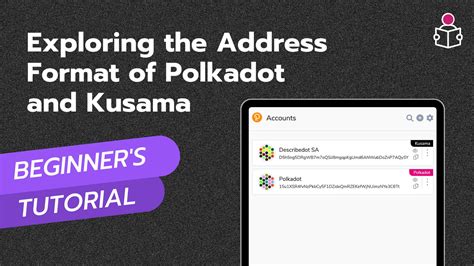
Kusama is a decentralized network that aims to create a self-sustaining ecosystem of autonomous nodes. The Kusama network was launched in 2019 and has gained considerable attention among cryptocurrency enthusiasts.
One of the main features of Kusama is its use of the Polkadot (DOT) blockchain as a parallel ledger, enabling interoperability between different networks. This allows the creation of new applications that can interact with other chains without relying on intermediaries or centralized exchanges.
Kusama’s native token, KSM, is used to pay transaction fees and incentivize node operators. The project also aims to create a decentralized autonomous organization (DAO) that governs the network’s development and decision-making processes.
Algorand (ALGO)
Algorand is another cryptocurrency that focuses on scalability and security. Launched in 2016, Algorand has gained popularity among institutional investors due to its high-performance and low-energy features.
One of Algorand’s key features is its use of the Proof of Stake (PoS) consensus algorithm, which allows for faster transaction processing times and lower energy consumption compared to traditional Proof of Work (PoW) algorithms. This makes Algorand an attractive option for applications that require high-speed transactions, such as cross-border payments.
Algorand’s native token, ALGO, is used to incentivize node operators and validators on the network. The project also aims to create a decentralized autonomous organization (DAO) that governs the network’s development and decision-making processes.
Kusama vs. Algorand Comparison
While Kusama and Algorand are both promising cryptocurrencies with a strong focus on scalability and security, there are some key differences between them.
Kusama focuses on creating a self-sustaining ecosystem of autonomous nodes, while Algorand focuses primarily on providing high-performance, low-energy features. This means that Kusama may be more suited to applications that require high-speed transactions, such as cross-border payments.
Algorand’s PoS consensus algorithm also makes it an attractive option for institutional investors looking to deploy their funds securely and efficiently.
Conclusion
In conclusion, Kusama (KSM) and Algorand (ALGO) are two promising cryptocurrencies with unique features that set them apart from the rest. While both projects have their strengths and weaknesses, they offer interesting opportunities for investors looking to diversify their portfolios.